

The Challenge of Access
Imagine walking across a bridge that isn’t quite finished, where the planks are missing, gaps widen the farther you go, and every step feels uncertain. For many English Language Learners (ELLs), that’s what daily classroom experiences can feel like. The content is there, the destination is in sight, but without the proper support, the journey can feel shaky and exhausting.
Why Scaffolding Matters
What changes this experience is scaffolding. With strong supports in place, structured guidance, gradual release, and meaningful opportunities for independence, students can move across that bridge with confidence. The goal isn’t to carry them across, but to provide just enough support so they learn how to navigate it on their own.
That’s where IDE Corp.’s Scaffold for Learning comes in. This flexible planning tool helps educators design varied and intentional learning experiences that support comprehension and engagement for all learners, particularly ELLs. It prompts teachers to consider different cognitive levels, learning modalities, and participation structures, including individual, partner, small-group, and whole-class approaches.

By using a Scaffold for Learning, educators can:
- Offer multiple entry points into the content
- Incorporate student choice in how they access material (e.g., video, small-group lesson, hands-on center)
- Align activities with specific standards or learning goals
In short, the Scaffold for Learning isn’t just a bridge for students; it’s the blueprint for building the bridge itself, ensuring that English Language Learners can cross with confidence.
Moving from Insight to Action
The insight is clear: Scaffolding isn’t an “extra;” it’s an essential design choice that transforms classrooms into spaces of inclusion and possibility. For educators looking to put this into practice, our upcoming Virtual Learning Community (VLC), Scaffolding Learning Experiences for ELLs, offers a deep dive into strategies that enhance comprehension, engagement, and independence for English Language Learners. Grounded in IDE Corp.’s 7 Essential Elements for ELL Support, this course equips teachers with actionable tools and practical scaffolds they can immediately apply in their classrooms.
For more information on our VLC, Scaffolding Learning Experiences for ELLs, contact us at solutions@idecorp.com.
Contact Us
Interested in a MyQPortal subscription, enrolling in one of our PLEs or VLCs, or have other questions?
Use the form to send us an email.
Click or Tap 1-833-337-8433 to give us a call.
Phone 1-833-EDQUIDDITY
Email solutions@edquiddity.com
Web https://www.edquiddity.com
Connect With Us
Copyright 2019-2025, EdQuiddity Inc All Rights Reserved. - Professional Learning and Upskilling Resources and Services Scaffolding Learning Experiences for ELLsGrounded in IDE Corp.’s 7 Essential Elements for ELL Support, this course equips educators with practical scaffolding strategies to enhance English Language Learners’ (ELLs) comprehension and engagement. Participants will explore structured supports while providing students with independent learning resources through differentiated instruction to create inclusive learning environments that foster academic success and language development.
Syllabus:
- Explore IDE Corp.’s 7 Essential Elements for ELL Support, understand language proficiency levels, and examine the role of scaffolding in content and language development.
- Design instructional activities and resources to support ELLs.
- Design discussion prompts to foster academic conversations and structured writing activities while embedding language supports into lessons.
- Explore differentiated strategies to promote independent learning and engagement.
- Adapt scaffolding strategies based on assessments, and develop a scaffolded lesson plan for immediate classroom use.
As more schools honor brain research by offering students longer class periods and fewer courses per day, teachers must rethink how they use time for teaching and learning. This five-week course will explore two models for teaching in a block schedule, providing educators with strategies to maximize student engagement and deepen learning. Participants will design units and lessons tailored for extended periods, whether envisioning a fluid, student-driven approach or a structured beginning-middle-end format. Through hands-on planning and practical applications, this course will position educators to enhance learning and make the most of block scheduling.
Syllabus
- Explore the neuroscience research for the “why” behind teaching in the block and how you can benefit from this research in the classroom
- Explore two models for teaching in the block to identify your comfort level
- Explore structures for maximizing learning in a block situation
- Develop lesson plans for teaching in the block
Participants in this course will use Students Taking Charge in Grades 6-12 by Dr. Nancy Sulla as a resource. The assigned book must be purchased in advance. Access to MyQPortal is included for all participants while enrolled in the VLC.
Developing Your Leadership MindsetIn this course featuring flexible time engagement to meet the needs of school and district leaders, you will consider your role as an administrator through the lens of Ten Mindsets for Transformational Leadership as outlined in Students Taking Charge: Implementation Guide for Leaders.* Start from day one of the course to build your own Mindset-Driven Leadership Toolkit as you gather tools and insights to take action in your learning community and enhance your leadership skills, leaving a legacy of influence.
Syllabus:
- Engaging with Ten Mindsets across multiple activity lists, or differentiated segments, throughout the course, and taking action based on your personal mission
- Gaining insights, tools, and resources for use in faculty meetings, observation conferencing, PLCs, learning walks, book clubs, and more
- Viewing the Ten Mindsets through a systems-based approach, making connections to key components of school and district goals, mission, and vision
- Connecting and engaging with one of the authors and other school leaders to enhance your leadership network
- Developing actionable steps to take on your leadership journey as you develop mindset-driven leadership skills!
Participants in this course will use Students Taking Charge: Implementation Guide for Leaders by Dr. Nancy Sulla, Tanya Bosco, and Julie Marks as a resource. The assigned book must be purchased in advance. Access to MyQPortal is included for all participants while enrolled in the VLC.
Using Formative Assessment to Drive InstructionExplore the structures and strategies you can use to gather formative assessment data to drive instruction that is targeted for increased student achievement. Design formative assessments for use with your students that can be used remotely or in person.
Syllabus:
- Developing formative assessments across four categories: temperature gauges, breakpoint assessments, student-directed assessments, and comprehensive assessments
- Using formative assessment data to differentiate instructional activities
- Using formative assessment data to drive facilitation in any environment
- Designing formative assessment grids to allow participants to easily collect and track assessment data from students working in class and remotely
Participants in this course will use Dr. Nancy Sulla’s book Reinventing the Classroom Experience as a resource. The assigned book must be purchased in advance. Access to MyQPortal is included for all participants while enrolled in the VLC.
New Teacher SeminarCreating a learner-centered classroom requires teachers to design opportunities for students to actively engage in their learning and maximize their potential. Designing differentiated learning activities, facilitating those learning activities with meaningful questioning, using a variety of formative assessment strategies and student reflections, and leveraging strategies to build students’ executive function skills all lead to putting students at the center of their educational process. Craft a plan for positioning your students to be active participants in the learning process as you design a classroom learning environment that engages and empowers students, building a greater sense of efficacy for them and for you as their teacher.
Syllabus:
- Exploring opportunities to know and understand your students
- Designing differentiated learning activities for engaging different types of learners
- Developing meaningful questions to promote learning through teacher facilitation
- Designing formative assessments for teacher use and for student self-assessment
- Exploring basic strategies for building executive function in your students
Participants in this course will use Dr. Nancy Sulla’s book It’s Not What You Teach But How as a resource. The assigned book must be purchased in advance. Access to MyQPortal is included for all participants while enrolled in the VLC.
PBL Implementation – Next Steps in Student-Driven LearningDeepen your knowledge of the power of PBL with a focus on implementation strategies. Design differentiated digital activity lists with multiple ways for students to learn, develop content facilitation grids and questions to support student-driven learning, and implement four types of formative assessments throughout the PBL unit. Note: Participants will apply course content to a previously created PBL task and rubric.
Syllabus:
- Designing activity lists that offer students required activities, choice activities (offering more than one way to build a concept or skill), and optional activities (offering extension opportunities to those who are advanced) from a brainstormed scaffold for learning
- Developing facilitation grids, laying out skills and concepts to assess student learning as the teacher facilitates instruction
- Designing facilitation questions to move students to higher-order thinking
- Understanding the role of the Four Types of Formative Assessment to support progress monitoring and growth
- Creating a transfer task as a venue for students to apply, or “transfer,” their learning from an authentic PBL unit to a new real-world context
This course will use Dr. Nancy Sulla’s book Students Taking Charge as a resource. The assigned book must be purchased in advance. Access to MyQPortal is included for all participants while enrolled in the VLC.
Developing Your Leadership MindsetIn this flexible course, you will consider your role as a teacher leader and future administrator through the lens of Ten Mindsets of Transformational Leadership as outlined in Students Taking Charge: Implementation Guide for Leaders. Then, you will identify a focus area for promoting leadership skills in others: your students, your colleagues, a committee, your department, etc. In the process, you will gain tools, insights, and leadership skills to take action as a transformational leader while building leadership capacity in students and colleagues.
Syllabus:
- Engaging with Ten Mindsets across multiple activity lists, or differentiated segments, throughout the course, and taking action based on your personal mission
- Gaining insights, tools, and resources for your classroom and for building leadership capacity in others — students and colleagues
- Viewing the Ten Mindsets through a systems-based approach, making connections to key components of your school’s and district’s goals, mission, and vision
- Connecting with one of the authors and other teachers across schools and districts
- Exploring scenarios and developing actionable steps to take on your leadership journey as you develop mindset-driven leadership skills!
Participants in this course will use Students Taking Charge: Implementation Guide for Leaders by Dr. Nancy Sulla, Tanya Bosco, and Julie Marks as a resource. The assigned book must be purchased in advance. Access to MyQPortal is included for all participants while enrolled in the VLC.
Strategies for Teacher’s Aides to Support the Learning EnvironmentAs a teacher’s aide, you are an essential part of the classroom community, providing the support that helps students flourish and teachers succeed. Throughout this course, we’ll explore the vital responsibilities of teacher’s aides, from effective collaboration with teachers, administrators, and parents, to supporting students with diverse learning needs. We’ll examine how you contribute to differentiated instruction, cultural responsiveness, and the success of students with IEPs and 504 plans.
Syllabus:
- Explore classroom management and behavioral support strategies.
- Gain insights into social-emotional learning (SEL) and executive functioning (EF) and how to integrate those strategies into each classroom you support.
- Examine how you contribute to differentiated instruction, cultural responsiveness, and the success of students with IEPs and 504 plans.
- Explore effective instructional support techniques, including literacy and numeracy strategies, integrating classroom technology, and co-teaching with the lead teacher.
- Learn strategies for supporting small groups and individual students, and how to leverage digital tools.
Access to MyQPortal is included for all participants while enrolled in the VLC.
Designing Equity-Driven Learning EnvironmentsEquitable and culturally responsive teaching practices raise the level of rigor and maximize potential for all learners. In this course, you will explore the role of teacher as curator and facilitator to reflect on your learning environment that accepts, appreciates, and advocates for cultural differences and social justice. Participants will explore and brainstorm problems focused on instructional and social equity. They will navigate and design culturally responsive resources, structures, and facilitation practices to address bias in and beyond the classroom. This course will position participants to leverage students’ culture, language, and life experiences into rigorous academic achievement.
Syllabus:
- Establishing working definitions of equity, bias, and social justice in the classroom
- Developing strategies and structures for prioritizing a culturally responsive classroom through needs identification, resource-access, and tuned facilitation
- Developing learning activities through a culturally relevant lens to meet cognitive levels and learning styles
- Designing differentiated opportunities for students to learn in an environment that promotes executive function through structures and facilitation
- Exploring the role of facilitator and facilitation strategies to build and maintain relationships and trust with students
- Brainstorming problems to address social justice and equitable access and opportunity issues within the students’ neighborhood
- Empowering students to become active participants in the learning process
Access to MyQPortal is included for all participants while enrolled in the VLC.
Structures and Strategies to Support Individualized LearningHow can you ensure that each of your learners is able to access learning and succeed in any learning environment? How can teachers make the most of their time with students to cover a lot of curriculum? The teacher’s role as a facilitator of learning has become more relevant than ever. Explore strategies to help students navigate their learning environment to build academic resilience, accelerate student learning through a focus on the power standards, and support social-emotional learning and executive function. This course will help you rethink instruction to prioritize differentiation and scaffolds that will meet all learners’ needs. Participants will deconstruct their curriculum to identify and teach to the power standards in ways that build foundational standards in the process.
Syllabus:
- Exploring and developing strategies to help students manage and self-regulate in any learning environment (inclusion, self-contained, or other)
- Gaining strategies and structures to support differentiated student engagement
- Developing purposeful opportunities for students to self-assess and reflect, as well as to support students’ executive function and social-emotional learning
- Exploring opportunities to build a learning community with parents, caregivers, aides, and/or paras to create an optimal learning environment
- Deconstructing your standards to identify the power standards and develop maps to connect your power standards to related content
- Generating related problems to drive instruction through the power standards
- Exploring formative and summative assessment strategies to encourage a data-driven environment that pushes students to higher achievement
Participants in this course will use Reinventing the Classroom Experience by Dr. Nancy Sulla as a resource. The assigned book must be purchased in advance. Access to MyQPortal is included for all participants while enrolled in the VLC.
Designing Differentiated Digital Activity ListsIn this course, participants will leverage choice and technology to provide students with the ultimate differentiated learning environment. They will develop differentiated digital activity lists rooted in rigorous instruction that offer multiple ways to learn and apply content. Participants will explore autonomy, purpose, and mastery as motivators in all learning environments. They will design differentiated digital activity lists to put students in charge of their own learning, creating a structure that allows students to make decisions within a structured framework. Making informed decisions is an essential life skill that teachers can support with intentional structures and strategies.
Syllabus:
- Exploring ends-based teaching as a foundation for differentiation
- Understanding the difference between the 5 types of instructional activities
- Connecting student choice and voice to empowerment and academic achievement
- Exploring cognitive levels and learning styles to develop 5 types of instructional activities for learning anywhere, anytime
- Building a differentiated digital activity list to provide students choice in how and when they engage in learning and practice activities
- Exploring the role of the teacher in an environment that empowers students to take more responsibility for their learning
- Exploring the role of technology to leverage opportunities for differentiation in differentiated digital activity lists
- Developing instructional videos and activities to support differentiation in digital activity lists
Participants in this course will use Dr. Nancy Sulla’s book Reinventing the Classroom Experience as a resource. The assigned book must be purchased in advance. Access to MyQPortal is included for all participants while enrolled in the VLC.
Digging Deeper: Creating a Climate of Executive FunctionParticipants will explore how executive function supports the critical life skills of conscious control, engagement, collaboration, empowerment, efficacy, and leadership. As you develop activities and strategies for your learning environment, your IDE consultant will guide you through the process of targeting your facilitation to improve students’ executive function. Throughout the course, participants will reflect upon and communicate their classroom experiences to receive virtual coaching from an IDE consultant.
Syllabus:
- Understanding the six levels of increasingly complex life skills that depend upon executive function
- Identifying activities and structures that build executive function focused around the critical six levels of life skills
- Understanding how teacher facilitation builds the executive function skills around the critical six levels of life skills
- Designing structures for the classroom to create a culture of executive function
- Developing tools for teacher facilitation to create a culture of executive function.
Participants in this course will use Dr. Nancy Sulla’s book Building Executive Function: The Missing Link to Student Achievement as a resource. The assigned book must be purchased in advance. Access to MyQPortal is included for all participants while enrolled in the VLC.
Designing PBLsExplore the power of the 6 Ps of PBL. Design a PBL task, a rubric to drive instruction, a scaffold of rich and diverse learning activities to implement with your students, and a plan for facilitating the learning.
Syllabus:
- Understanding how “Raising Academic Rigor,” “Engaging Students in Learning,” and “Building Student Responsibility for Learning” go hand-in-hand
- Exploring the 6 Ps of PBL: place, problem, project, profession, phenomena, and pursuit-based learning
- Developing authentic, open-ended, problem-based tasks that create a felt need to learn
- Designing analytic rubrics to offer clearly articulated expectations, a roadmap for all learners, and challenges for gifted learners
- Designing a scaffold for learning to develop differentiated learning and practice activities
- Developing one or more other structures to support the unit, e.g.:
- Formative Assessments to drive instructional planning
- Facilitation Questions to probe students’ thinking at higher cognitive levels
- Facilitation Grid to manage your ongoing student facilitation
Participants in this course will use Dr. Nancy Sulla’s book Students Taking Charge as a resource. The assigned book must be purchased in advance. Access to MyQPortal is included for all participants while enrolled in the VLC.
Designing Differentiated Digital Activity Lists In this course, participants will leverage choice and technology to provide students with the ultimate differentiated learning environment. They will develop differentiated digital activity lists rooted in rigorous instruction that offer multiple ways to learn and apply content. Participants will explore autonomy, purpose, and mastery as motivators in all learning environments. They will design differentiated activity lists to put students in charge of their own learning, creating a structure that allows students to make decisions within a structured framework. Making informed decisions is an essential life skill that teachers can support with intentional classroom practices.
Syllabus
- Exploring ends-based teaching as a foundation for differentiation.
- Understanding the difference between learning and practice activities.
- Connecting student choice and voice to empowerment and academic achievement.
- Exploring UDL strategies to consider cognitive levels and learning styles when developing learning and practice activities for anywhere, anytime.
- Building a differentiated digital activity list to provide students choice in how and when they engage in learning and practice activities.
- Exploring the role of the teacher in an environment that empowers students to take more responsibility for their learning.
- Exploring the role of technology to leverage opportunities for differentiation in differentiated digital activity lists.
- Developing instructional videos and activities to support differentiation in digital activity lists.
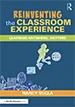 Participants in this course will use Reinventing the Classroom Experience by Dr. Nancy Sulla as a resource. The assigned book must be purchased in advance. Access to MyQPortal is included for all participants while enrolled in the VLC. 25 credit hours.
“Work smarter, not harder!” AI tools give us the power to do just that. The possibilities are endless! Explore the opportunities for using AI-driven tools to design rubrics, protocols, instructional activities, and more! Also, generate higher-order questions while engaging with your class and write your talking points for lessons and videos. Learn the nuances of using AI as your instructional design assistant and your power partner in the classroom to meet individual student needs through greater personalized learning.
Syllabus:
- Understanding different aspects of AI and how it can look in your classroom
- Leveraging AI as a thought partner in instructional design to support your diverse student population
- Exploring AI tools and resources to support building executive function and SEL skills
- Leveraging AI to design activities, leveled facilitation questions, and more
Access to MyQPortal is included for all participants while enrolled in the VLC.
Prioritizing Social and Emotional LearningSocial and emotional learning (SEL) plays a major role in one’s success in life and career. Being in touch with emotions, controlling them, setting and achieving goals, engaging with others in socially appropriate ways, demonstrating empathy toward others, establishing positive relationships, and taking responsibility in life are critical skills that are not necessarily included in your current curriculum. In this course, participants will develop strategies to promote self-awareness, self-management, social awareness, relationship, and responsible decision-making skills in a student-driven learning environment.
Syllabus:
- Developing an understanding of the core competencies of SEL as defined by CASEL
- Developing an understanding of the interplay among PBL, structures, and teacher facilitation in any learning environment
- Exploring how each of the core competencies of SEL is addressed through the goals of engagement, empowerment, and efficacy in a student-driven classroom
- Developing a set of structures for building SEL in any learning environment
- Developing a repertoire of teacher facilitation strategies for building SEL in any learning environment
- Developing learning activities that promote SEL in any learning environment
Participants in this course will use Dr. Nancy Sulla’s book Reinventing the Classroom Experience as a resource. The assigned book must be purchased in advance. Access to MyQPortal is included for all participants while enrolled in the VLC.
Building Executive Function to Support Student SuccessExecutive function is critical to students’ academic achievement and social-emotional learning. Focusing, shifting attention from one activity to another, working toward a goal, persisting in a task, catching and correcting errors, and managing time are all executive function skills that students need to be successful in any learning environment. The sudden shift to remote learning during the pandemic transformed education. Executive function skills often determined student resilience and success. The good news is that executive function skills can be developed and accelerated. Participants will explore six key life skill areas that are uniquely supported by executive function and design instructional plans to intentionally build these critical achievement prerequisites in all learners.
Syllabus:
- Understanding how executive function is inextricably linked to the academic achievement and social-emotional learning of students at all developmental levels through the lens of six levels of increasingly complex life skills
- Understanding how executive function develops and how growth can be accelerated
- Understanding the difference between learning and practice activities, and the importance of purposeful “grappling” with content
- Developing instructional activities aimed at building executive function across the seven key components: working memory, cognitive flexibility, planning, reasoning, problem-solving, inhibitory control, and self-awareness
- Developing an implementation plan that includes powerful facilitation strategies and purposeful structures to develop executive function and promote learning acceleration for all learners
Participants in this course will use Dr. Nancy Sulla’s book Building Executive Function: The Missing Link to Student Achievement as a resource. The assigned book must be purchased in advance. Access to MyQPortal is included for all participants while enrolled in the VLC.