PBL and Durable Skills
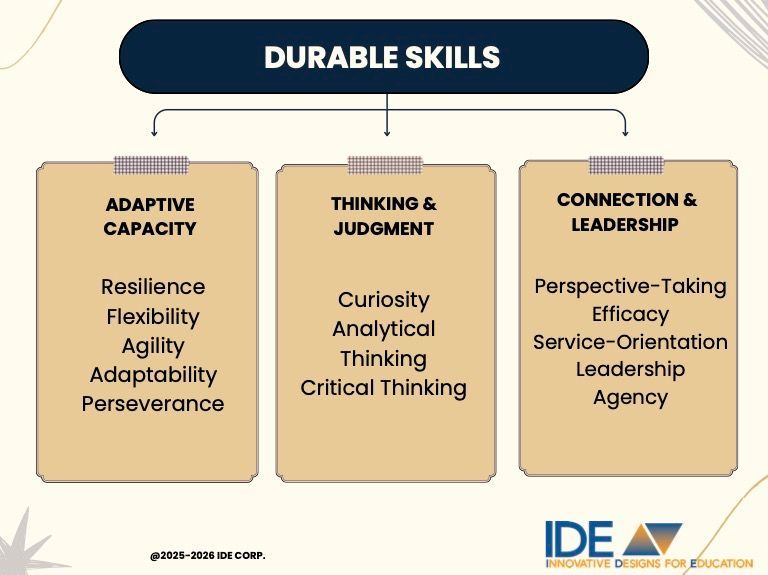
Leveraging PBL is a powerful framework for engaging students in content standards and skills that support greater retention. Also, when designed intentionally, it builds a plethora of durable skills in students from pre-kindergarten through 12th grade, such as:
- Resilience
- Flexibility
- Agility
- Adaptability
- Perseverance
- Curiosity
- Analytical thinking
- Critical thinking
- Perspective taking
- Efficacy
- Service orientation
- Leadership
- Agency
These critical skills transcend any content area, and many of them appear in
The Future of Jobs Report 2025 by the World Economic Forum. That list isn't arbitrary; the Forum ties it to the forces already reshaping the world these students are growing into: new technology moving into more jobs, a shifting climate and economy, and a more complicated, connected world to navigate. Whatever these students end up doing, they'll need these skills to do it well.
Sure, students can learn these words and know what they mean, but to truly understand them, we need students to experience these durable skills.
Durable Skills in Practice
Students develop . . .
. . . curiosity by engaging in authentic problems or projects that don’t already have a determined solution.
. . . service orientation when they share the greeting cards they designed with their local nursing home.
. . . agility by grappling with content and applying it to situations like never before to solve problems.
. . . perseverance when the initial model for the community garden didn’t work, so they had to go back to drafting another solution.
. . . perspective taking when they advocate for a social justice issue that matters to them while listening to their peers' perspectives.
Having your students engage in PBL is the perfect venue not only to teach content but also to develop the durable skills that students will need to be productive citizens.
To learn more about leveraging PBL for building durable skills, check out our recently updated Professional Learning Essentials for
Teaching Through the 6 Ps of PBL, now enhanced with
Q, an AI PBL Coach for immediate, rubric-aligned feedback.